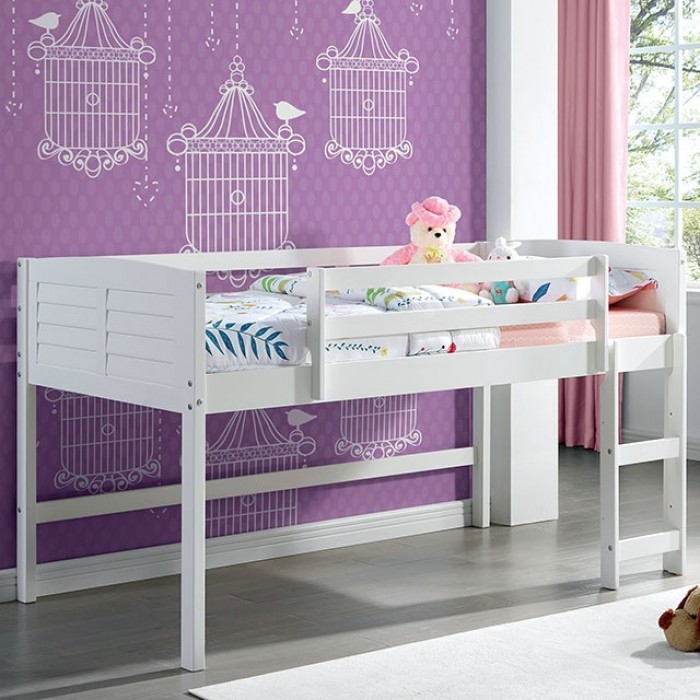
A kids room is the hardest room in the house to get right, because the person who uses it changes every year. A toddler needs a safe floor to play on. A seven-year-old needs a desk for homework and shelves for books. A teenager needs privacy, a place to study, and space for friends.
If you decorate for just one age, the room will feel wrong within two years. The trick is to buy pieces that can change with your child, and to keep the room flexible enough that a small change makes a big difference. You do not need to redo the whole room every birthday. You need a good bed, storage your child can use alone, and a layout that leaves room to grow.
Buy a Bed That Lasts More Than One Phase
The bed is the biggest purchase in a kids room, and the one people replace most often. A tiny toddler bed looks cute for a year and then becomes useless. A full-size single bed, on the other hand, can last from age five right through the teenage years. If your child is small, a bed rail keeps them safe for the first year or two, and then it comes off when they are ready.
A bunk bed or a loft bed is worth thinking about if the room is small. A loft bed frees up the floor underneath for a desk, a reading corner, or extra storage. That matters a lot once homework starts. A bunk bed works well for two children sharing a room, but check the ceiling height first. Your child needs enough room to sit up in the top bunk without hitting their head.
Storage Your Child Can Use Alone
A tidy kids room is not about strict rules. It is about storage a child can reach and use without help. Low shelves, open bins, and drawers at knee height let a five-year-old put toys away by themselves. High cupboards only an adult can reach mean you will be the one tidying up, every night.
When you pick kids furniture, look for pieces with rounded corners and stable bases. A tall, narrow bookcase a child could pull over is a risk. Fix it to the wall with a strap. Same goes for a wardrobe or a chest of drawers. Wall straps cost very little and prevent the most serious accidents in a kids room.
Make Room for Homework Before You Need It
Homework starts sooner than you think, and a child who does homework on the bed or at the kitchen table will struggle to focus. A small desk in the bedroom, even a simple one, tells your child that schoolwork has its own place. It does not need to be big. A desk that holds a book, a pencil case, and a lamp is enough for the first few years.
Put the desk near a window if you can. Natural light helps, and a view gives tired eyes somewhere to rest. Keep the desk clear of toys. If the desk is buried under toys, homework will end up on the bed again, and you are back where you started.
Leave Space to Play, Even in a Small Room
A kids room needs empty floor space. That sounds obvious, but it is the first thing to disappear when the room fills up with furniture. A child needs room to build, to draw on the floor, to play with friends, and to spread out a puzzle. If every centimetre of floor is covered, the child will play in the living room instead, and the bedroom will just be for sleeping.
Keep at least a third of the floor clear if you can. That might mean a smaller wardrobe, or a bed with storage underneath instead of a separate chest of drawers. A fold-up desk or a wall-mounted shelf can free up more floor. The goal is not a big room. It is a room with enough open space to use.
Let Them Have a Say as They Grow
A child's room should feel like their room, not like a showroom. Let them pick the colour of their bedding, the posters on the wall, and how their shelves are arranged. These are small choices that cost nothing, and they make a child feel ownership of the room. A child who feels ownership is more likely to look after the room.
You will not love every choice they make. That is fine. The neon poster phase passes. The point is that the room feels like theirs. If you control every detail, they will not care about the room, and you will be the one tidying it.
Plan for the Next Two Years, Not the Next Ten
It is tempting to plan a kids room for the next ten years. Do not. Children change too fast. Plan for the next two years, and pick pieces that can adapt. A bed that adjusts, a desk that grows taller, and storage that can be rearranged will carry you through several phases without a full rebuild.
Buy the best bed and mattress you can afford, and save money on the rest. A child spends ten hours a night in bed. A good mattress supports growing bones and helps them sleep well. A cheap mattress sags within a year and can cause back pain. The desk and shelves can be simple. The bed cannot.
You do not need to buy everything at once. You need a bed that lasts, storage they can use alone, a desk for homework, open floor space to play, and a room that lets them have a say. Plan for the next two years, keep the big pieces simple, and let the small things change as your child changes.

 Customer Service

 Customer Service

 Google Reviews
 Yotpo Reviews